
Makers Unite
Winter 2022
For my thesis, I partnered with Makers Unite, a local textile atelier and Dutch social enterprise. Makers Unite offers a 6-week professional development course, known as the Makers Unite Creative Lab (MUCL), aiming to assist “creative newcomers” determine their next professional step in the Netherlands.

Makers Unite exhibition in ‘De Hallen’, Amsterdam, Netherlands
The problem: After 19 iterations of MUCL, Makers Unite was curious to understand the impact that participation in the Creative Lab program had in offering creative newcomers a ‘leg up’ when it came to finding employment in the Dutch creative industries. In partnership with Makers Unite, I sought to understand how vocational aspirations are pursued through creative processes and activities amongst this community network of newcomers.
Research question: How do past participants perceive participation in MUCL in aiding their professional development and apply their MUCL experience in their vocational journey?
Method: 3-months of virtual in-depth interviews due to initial COVID-19 health and safety restrictions, evolving to in-person meetings, ethnographic participant observation (aka. “deep hanging out”), active participation in MUCL 20, Makers Unite studio visits, and various arts-based practices.
Partnership impact: Makers Unite used the results of my research to inform strategic decisions related to internal resource management, MUCL curriculum development, and social programming catered to their community of newcomers (i.e., refugees and asylum-seekers).
The 40-page final research report produced titled “How Creatives’ Nets Work” showcases my research, writing skills, and visual design skills. Contact me for a copy of the full report.
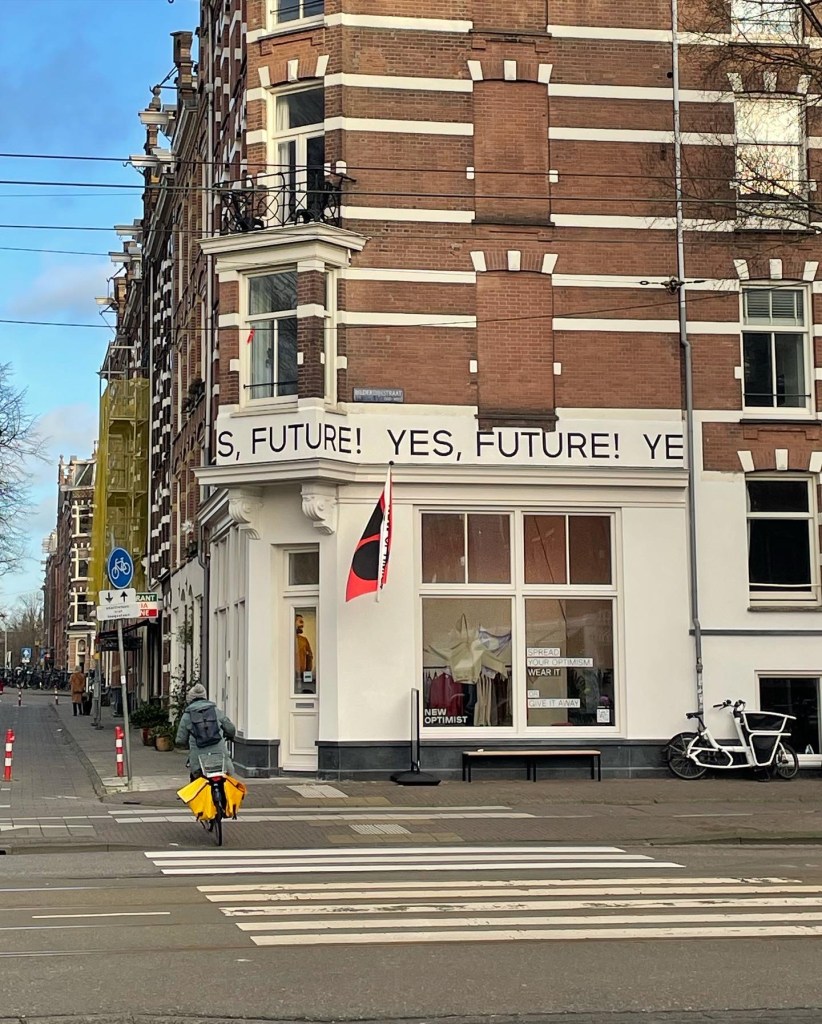
‘Future’ signage seen on Amsterdam streets
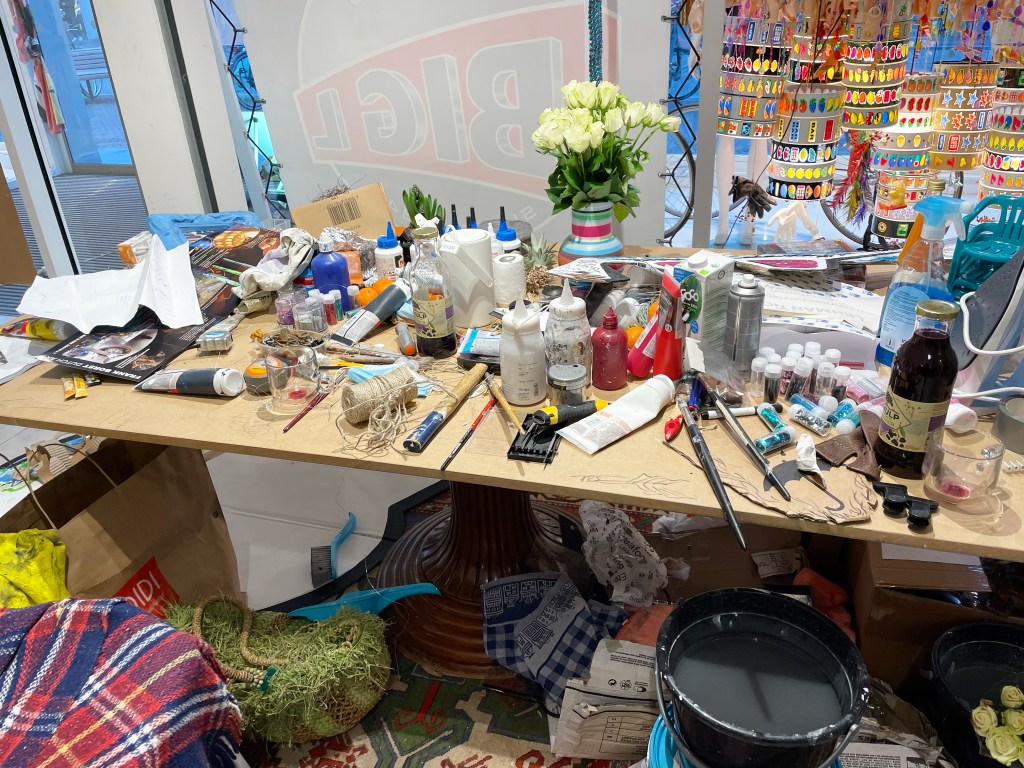
An artist’s workspace
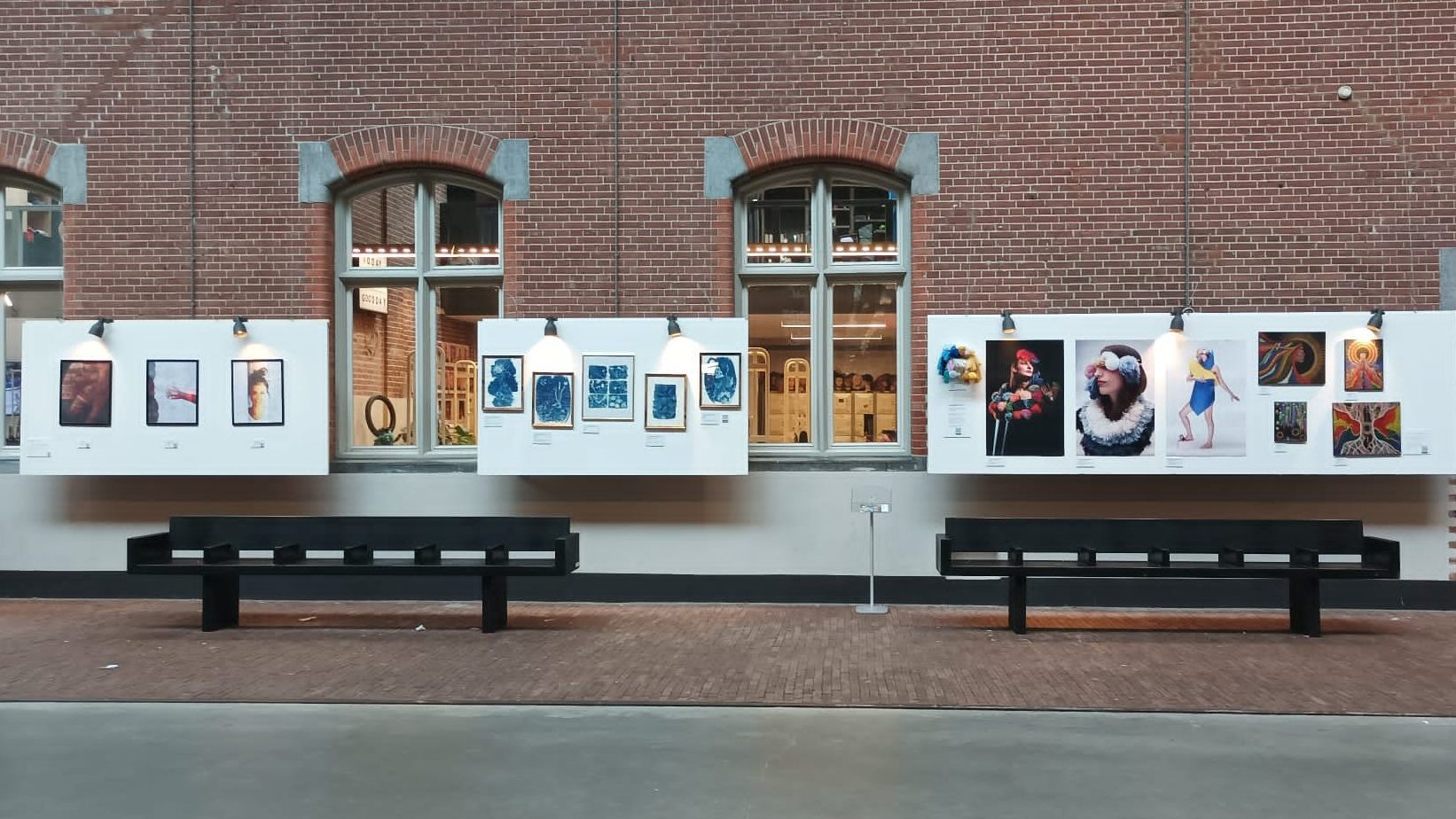
“Pieces of Peace” Exhibition in De Hallen, April 2022
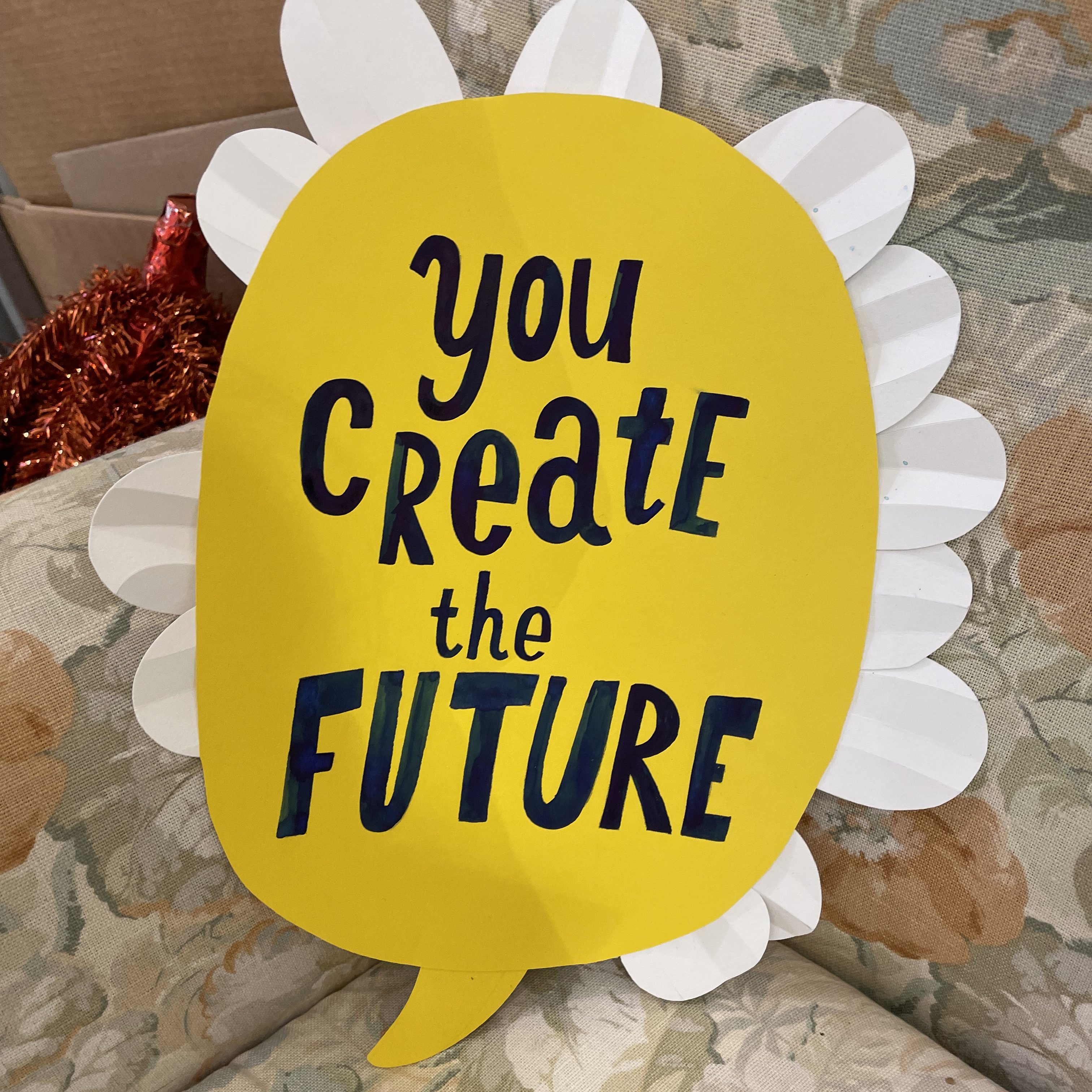
“You create the future” paper craft
Challenging conceptualizations of the future
Amid the vast uncertainty and obstacles presented during the asylum-seeking process, the vocational aspirations of forced migrants in the Netherlands have typically been overlooked in existing ethnographic research. Emerging literature from the sub-disciplines of design anthropology and organizational studies present a foundational theoretical framework to explore future-making as a method of ethnographic inquiry into how people engage with the future.
This research project naturally sparked conversations around conceptualizations of the future among those forcedly displaced, living at the margins of Dutch society. The study of aspirations and dreams involves imagining alternative potentialities and speculating the future. An anthropology of the future and ethnography of aspirations challenges us to ask: whose future aspirations are worthy of recognition?
I explored this topic more in my full Master’s thesis, “Creativity as a Technology of the Imagination: an ethnographic study of
Future-making Practices and Aspirations among Forced Migrants in
Amsterdam”.
Read the full downloadable thesis paper here.
 Nicole Aleong